
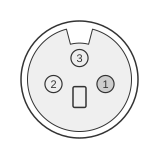
 3 pin mini-DIN female connector at the computer.
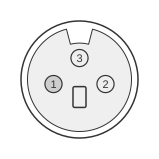 3 pin mini-din male connector at the cable.
The SGI StereoView port is a 3-pin mini-DIN female connector found on SGI Indy workstations (documented in the Indy Owner’s Guide, July 1996) and carried forward on later SGI systems with VPro graphics boards, including the Octane and Octane2. It powers and synchronises infrared emitters for LCD shutter-glass stereoscopic displays such as the StereoGraphics CrystalEyes. The port supplies +12 V DC at up to 0.5 A — distinguishing it from the physically identical VESA stereo mini-DIN-3, which uses +5 V — and carries a digital frame-sync signal that selects the left or right eye on each video field. Pin 3 is labelled VERTICAL – ODD FIELD in Indy documentation; later VPro systems describe the same signal as STEREO_LEFT (high = left eye, low = right eye).
| Pin | Description |
|---|---|
| 1 | STEREO POWER (+12V, 0.5A) |
| 2 | STEREO GROUND |
| 3 | VERTICAL - ODD FIELD (1=Left, 0=Right) |
Signals
- STEREO POWER — +12 V DC output from the workstation to the StereoView emitter; rated at 0.5 A maximum.
- STEREO GROUND — Power return / signal ground.
- VERTICAL – ODD FIELD — Digital frame-synchronisation signal driven by the graphics subsystem; logic high selects the left-eye shutter, logic low selects the right-eye shutter. Referred to as STEREO_LEFT on Octane/Octane2 VPro systems, where the same electrical function applies.
Notes
- The physical connector is a 3-pin mini-DIN, the same shell used by the VESA PC stereo standard; however, SGI’s +12 V power rail is incompatible with VESA’s +5 V supply. A shutter-glass emitter designed for one standard should not be assumed safe on the other without verification.
- On some earlier and larger SGI systems (such as the Onyx 3000 series DG5 board) a 9-pin sub-D connector was used for the stereo port, carrying additional frame-lock lines. That is a distinct, larger connector and is not described here.
- On Octane and Octane2 workstations the StereoView port is located on the VPro graphics board (V6, V8, V10, V12 variants) and is documented in SGI documents 007-4207-002 and 007-4210-003.