
The Powercom King (KIN series) UPS uses a DE-9 (DB-9) computer interface that combines RS-232 serial data lines with relay contact-closure status outputs on a single 9-pin D-sub connector. The UPS end presents a male DE-9 plug; the computer end presents a female DE-9. Serial communication lines (RxD, TxD, DTR, RTS) share the connector with two normally-open relay contacts — Mains Failure and Battery Low — that close to ground when the respective fault condition is active. This hybrid arrangement allows both UPS monitoring software and simpler contact-closure utilities to operate via the same cable.
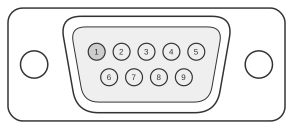 9 pin D-SUB male connector to the UPS
 9 pin D-SUB female connector to the computer
| UPS Signal Name | DB-9 Male (UPS end) | DB-9 Female (PC end) | PC Signal Name |
|---|---|---|---|
| RxD | 1 | 2 | |
| AC Fail | 2 | 9 | Contact closure |
| n/a | 3 | 1 | not used |
| GND | 4 | 5 | Common ground |
| Bat Low | 5 | 6 | Contact closure |
| TxD | 6 | 3 | |
| GND | 7 | 8 | |
| RTS | 8 | 7 | |
| DTR | 9 | 4 |
Notes
- AC Fail and Bat Low - normally open (shorted to GND when active).
- The RS-232 serial interface operates at 2400 bps, 8 data bits, 1 stop bit, no parity.
- The UPS end uses a male DE-9; the computer end uses a female DE-9 (the reverse of a standard serial extension cable).
Signals
- RxD — RS-232 receive data from the computer to the UPS.
- AC Fail — Mains failure status; normally-open relay contact, closes to GND when mains power is lost.
- n/a — Not used.
- GND — Signal common ground.
- Bat Low — Battery low status; normally-open relay contact, closes to GND when battery charge is insufficient.
- TxD — RS-232 transmit data from the UPS to the computer.
- GND — Signal common ground (second ground reference).
- RTS — RS-232 Request To Send handshake line.
- DTR — RS-232 Data Terminal Ready handshake line.