
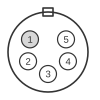
 5 pin XLR male connector to the LSC Lighting Product
 9 pin D-SUB female connector to the computer
The LSC CodeLINK cable is a proprietary RS-232 serial programming cable used to update firmware and communicate with LSC lighting consoles from a Windows PC. It carries only three active signals — Ground, Transmit, and Receive — between a 5-pin XLR male inline connector at the LSC device end and a 9-pin D-SUB female inline connector at the PC end. LSC introduced this cable for legacy firmware programming before SD card and USB methods became available; the CodeLINK software is now retired. A DB25 variant of the PC-end connector was also produced for older computers.
| LSC Lighting Product Pin name | LSC Lighting Product Pin | Direction | PC Pin | PC Pin name | Description |
|---|---|---|---|---|---|
| Gnd | 1+ Case | - | 5 | ||
| Tx | 4 | - | 3 | ||
| Rx | 5 | - | 2 |
It is also possible to make the cable using a DB25 for older style computers. This requires:
| Function | 5pin XLR Male(inline) | DB9 Female(inline) | DB25 Female(inline) |
|---|---|---|---|
| Gnd | 1 + Case | 5 | 1+7 |
| Tx | 4 | 3 | 2 |
| Rx | 5 | 2 | 3 |
Notes
The XLR connector body must be nickel-plated (conductive). Black non-conductive XLR housings will prevent the ground connection and CodeLINK will not communicate. For the maXim with options card, pin 1 of the XLR connector must also be connected to mains ground; when using a laptop, pin 1 and the connector case must be connected together.
Signals
- Gnd — Signal ground; XLR pin 1 and connector case to DB9 pin 5 (or DB25 pins 1 and 7)
- Tx — Transmit data from LSC device to PC; XLR pin 4 to DB9 pin 3 (or DB25 pin 2)
- Rx — Receive data from PC to LSC device; XLR pin 5 to DB9 pin 2 (or DB25 pin 3)