
Citizen impact and point-of-sale printers, including the CBM-910 series, provide an asynchronous EIA RS-232C serial interface via a 25-pin D-sub connector on the printer (Amphenol DDK 17LE-13250 shell on the printer body, 17JE-23250 on the cable). The host computer connects via a standard DE-9 (DB-9) female port as defined by EIA-574. Signal levels follow RS-232C: logic 1 (mark) at −8 V, logic 0 (space) at +8 V. Selectable baud rates range from 1200 to 19200 bps; the interface carries TD, RD, GND, and DTR for online status, with an optional RESET signal controlled by a DIP switch.
 9 pin D-SUB female connector
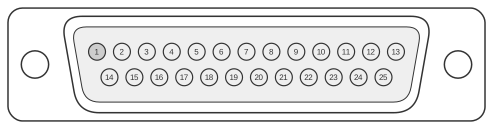 25 pin D-SUB male connector
| Name | Pin | Direction | Pin | Name | Description |
|---|---|---|---|---|---|
| grd | grd | ||||
| 2 | 2 | ||||
| 3 | 3 | ||||
| 4 | 6 | ||||
| 4 | 8 | ||||
| 5 | 7 | ||||
| 6 | 20 | ||||
| 7 | 5 | ||||
| 8 | 4 | ||||
| 9 | 22 |
Notes
The DB9F connector is on the host (computer) end of the cable; the DB25M connector plugs into the printer’s 25-pin D-sub serial port. The Citizen CBM-910 uses asynchronous framing; baud rate, parity, and stop bits are configured via DIP switches on the printer. Pin 23 (TTL Reset) is active by factory default; pin 25 (Reset) can be substituted via DIP switch 3. A data overrun error occurs if data arrives whilst the BUSY signal is asserted. Maximum recommended cable length follows TIA-232-F guidelines (≤15 m at 20 kbps for standard cable capacitance of 2500 pF).
Signals
- FG — Frame ground (pin 1, DB25); protective earth connection to printer chassis
- TD — Transmit data (pin 2, DB25); serial data output from printer to host
- RD — Receive data (pin 3, DB25); serial data input from host to printer
- GND — Signal ground (pin 7, DB25); reference for all RS-232C signal levels
- BUSY — Printer busy (pin 19, DB25); asserted when printer cannot accept data
- DTR — Data terminal ready (pin 20, DB25); indicates printer online status
- RESET-TTL — TTL-level reset input (pin 23, DB25); factory default reset signal
- RESET — RS-232C-level reset input (pin 25, DB25); selectable via DIP switch 3