
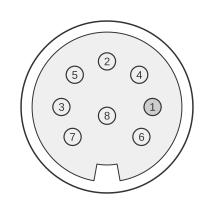
 8 PIN DIN (DIN45326) MALE at the Computer
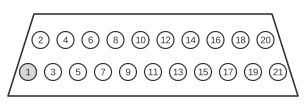 21 PIN SCART MALE to the TV
The Commodore 128 and C64C output video through an 8-pin DIN (270°) connector driven by the 8564 (NTSC) or 8566 (PAL) VIC chip, carrying separated luminance and chroma signals at 1 Vp-p into 75 Ω alongside composite video and audio. The 21-pin Euroconnector (SCART), defined by CENELEC EN 50049-1, was the common European television input of the late 1980s and 1990s, supporting composite, RGB, and S-Video signals plus stereo audio. This cable routes the luma (LUM) and chroma signals from the computer’s DIN port into the corresponding SCART pins on a television, together with audio output, enabling a higher-quality S-Video-style picture compared to a plain composite connection.
| Computer | TV |
|---|---|
| LUM | 1 |
| CHROMA | 8 |
| GND | 2 |
| AOUT | 3 |
Signals
- LUM — Luminance/sync output from the C128/C64C 8-pin DIN port (pin 1); 1 Vp-p, 75 Ω, 0.5 V DC offset
- CHROMA — Chroma (colour subcarrier) output from the C128/C64C 8-pin DIN port (pin 6); 1 Vp-p, 75 Ω, 0.5 V DC offset
- GND — Signal ground
- AOUT — Audio output from the C128/C64C 8-pin DIN port (pin 3); 1 Vp-p, 1 kΩ impedance
Notes
SCART does not define a dedicated chroma-only input in EN 50049-1; support for separated luma/chroma over SCART is television-dependent. Pin 1 of the SCART socket is the composite video input (CVBS), which can also carry luma in televisions that implement S-Video-over-SCART. Pin 8 of the SCART socket carries audio. The fast-blanking control line (SCART pin 16) is not wired in this cable; without a blanking signal the television will default to composite mode rather than S-Video mode, so actual S-Video switching behaviour depends on the specific TV’s implementation.