
 9 PIN D-SUB FEMALE to the Computer
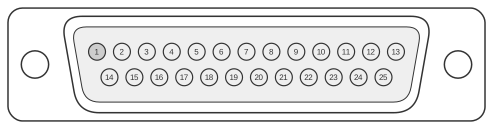 25 PIN D-SUB MALE to the Modem
A two-wire serial cable connects a DE-9 (commonly called DB9) DTE port on a computer to the DB-25 DCE port on a modem using only the three essential signals: Transmit Data, Receive Data, and Signal Ground. The governing standard is TIA/EIA-232-F (formally Interface Between Data Terminal Equipment and Data Circuit-Terminating Equipment Employing Serial Binary Data Interchange), which defines both the DB-25 and DE-9 connector pin assignments used here. Because no hardware handshaking lines run between the two ends, flow-control signals on the DE-9 side (RTS/CTS and DSR/DCD/DTR) are looped back locally, and the DB-25 modem-side handshake pins are similarly tied together, satisfying UART flow-control requirements without a physical connection to the modem.
| Female | Male | Dir | |
|---|---|---|---|
| Shield Ground | 1 | ||
| Transmit Data | 3 | 2 | OUT |
| Receive Data | 2 | 3 | IN |
| System Ground | 5 | 7 | |
| Jumper these: | |||
| Request to Send | 7 | OUT | |
| Clear to Send | 8 | IN | |
| Data Set Ready | 6 | IN | |
| Carrier Detect | 1 | IN | |
| Data Terminal Ready | 4 | OUT | |
| Request to Send | 4 | OUT | |
| Clear to Send | 5 | IN | |
| Data Set Ready | 6 | IN | |
| Carrier Detect | 8 | IN | |
| Data Terminal Ready | 20 | OUT |