
A USB-to-RS-232 serial converter cable bridges USB 2.0 Full Speed (12 Mbit/s) on the host side to the TIA/EIA-232-F unbalanced serial interface on the device side. Inside the cable dongle, a USB UART bridge IC — commonly the FTDI FT232R — presents a virtual COM port to the operating system and translates USB packets to a TTL-level UART. Because TIA/EIA-232-F demands driver voltages of ±5 V to ±15 V whereas the bridge IC outputs 1.8 V–5 V TTL logic, an RS-232 level-shifter such as the MAX232 is also incorporated to generate the correct ±9 V swing using a charge-pump from a single 5 V supply. The DE-9 female connector on the serial side carries the full complement of RS-232 modem-control signals: TxD, RxD, RTS, CTS, DTR, DSR, DCD, RI, and Signal Ground.
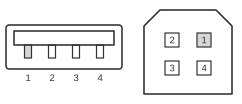 4 pin USB A / USB B / mini-USB jack connector at the computer’s USB cable
 9 pin D-SUB female connector at the computer’s serial cable
Notes
- The USB side is USB 2.0 Full Speed; the cable presents a standard type-A or type-B USB plug to the host.
- The FTDI FT232R bridge IC provides 128-byte transmit and receive FIFOs and supports baud rates from 300 baud to 3 Mbit/s. Its VCCIO pin sets the TTL logic level (1.8 V, 2.8 V, 3.3 V, or 5 V).
- Where true RS-232 voltage levels (±5 V to ±15 V) are required on the DE-9 side, a MAX232 or equivalent level-shifter is used; the MAX232 operates from a single 5 V supply and its internal charge-pump generates approximately ±9 V.
- The DE-9 (9-pin D-sub) female connector is the most common RS-232 connector per TIA/EIA-232-F and carries: pin 2 RxD, pin 3 TxD, pin 5 Signal Ground, pin 7 RTS, pin 8 CTS, plus DTR, DSR, DCD, and RI on the remaining pins.
- VCP (virtual COM port) drivers for Windows, Linux, and macOS are supplied by FTDI (CDM driver package); the cable enumerates as a standard COM port without custom application software.